






Listen...
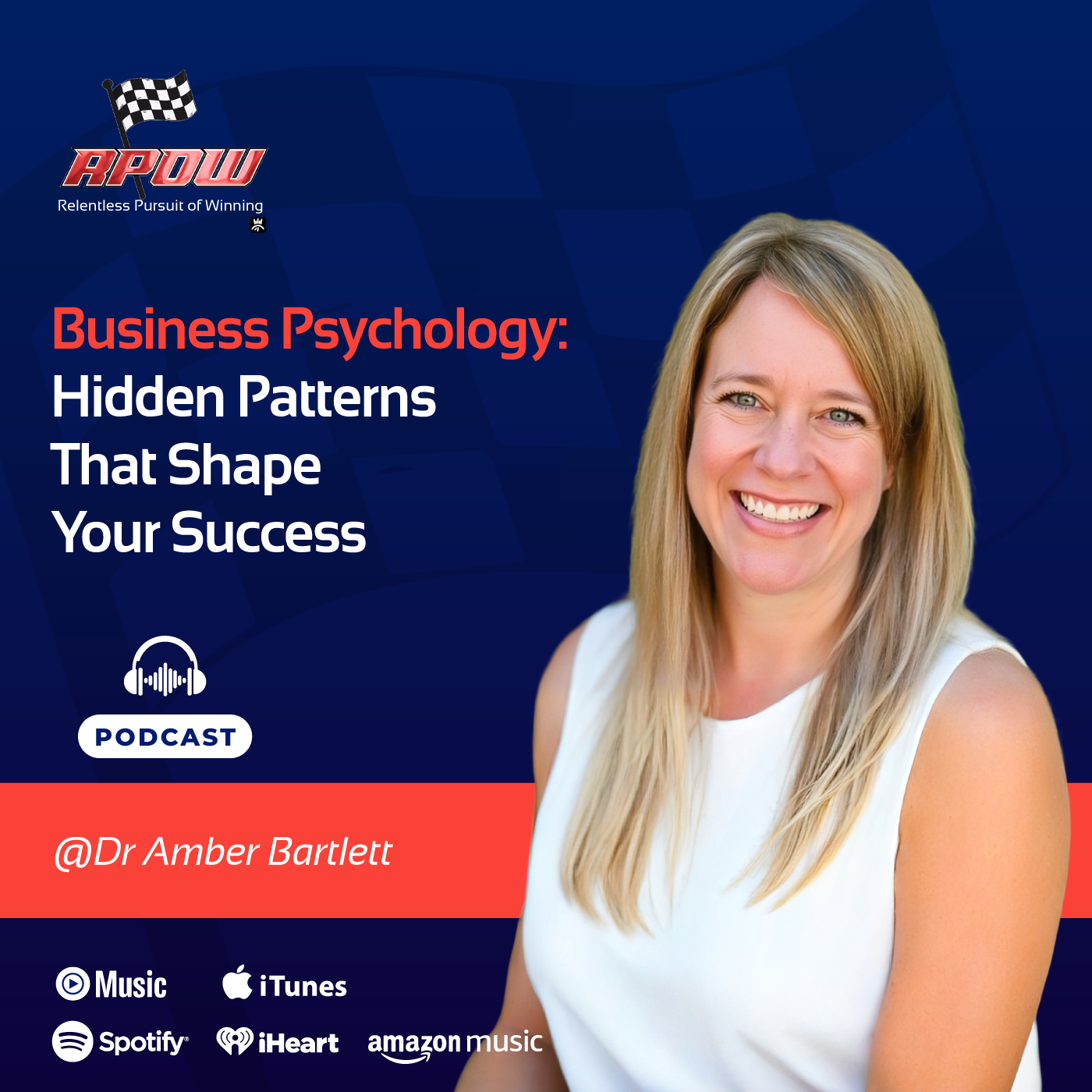
Business Psychology: Hidden Patterns That Shape Your Success
🔥 Excerpt
“When you forget your why, that’s a dangerous place to be.” – Dr. Amber Bartlett
⚡ TL;DR
A business can have the right strategy, tools, and growth plan yet still feel stuck. Dr. Amber Bartlett explains why the real obstacle is often psychological: fear of letting go, a need for control, burnout, avoidance, limiting beliefs, and patterns that quietly shape how leaders make decisions.
📄 Show Notes
Business psychology starts with a question many entrepreneurs rarely have time to ask: what is actually driving the way I operate my business?
A company can have capable people, sound processes, customers, and revenue while something beneath the surface continues to create friction. Dr. Amber Bartlett works in that space, helping business owners identify the patterns behind decisions and behavior so they can understand what is actually keeping the business from moving forward.
What does business psychology reveal that strategy can miss?
Dr. Amber Bartlett approaches business problems by looking for the pattern underneath the visible problem. Entrepreneurs often arrive with an explanation for what is wrong, yet the actual obstacle can be somewhere else.
One client believed she needed help getting more customers. The underlying issue was how she responded when prospective clients reached out. Another believed employee management was the problem, when the deeper issue was her unwillingness to let go of control.
Why can successful entrepreneurs become stuck?
Experience shapes behavior. A previous failure with delegation can make an owner reluctant to trust again. A history of carrying everything personally can make asking for help feel uncomfortable.
Bartlett points to subconscious beliefs and patterns that influence behavior without the entrepreneur necessarily recognizing them. Her work seeks to identify the root behind the result so the entrepreneur can understand what is actually happening before deciding what needs to change.
The question becomes less about finding another productivity technique and more about understanding why the same patterns continue to appear.
What does burnout have to do with business performance?
Burnout can develop through a combination of weak boundaries, overwhelming responsibilities, isolation, and the feeling that there is no clear place to begin. For entrepreneurs, the business can become intertwined with personal identity, making recovery more complicated.
Bartlett connects sustainable performance with remembering why the business existed in the first place and rebuilding around what actually matters.
How do you know when a business is no longer the right fit?
Letting go of a business is not automatically failure. It is one of the hardest decisions for an entrepreneur because persistence is often treated as evidence of commitment.
Bartlett has worked with clients who ultimately decided to sell their businesses. She also closed one of her own businesses after recognizing that it was consuming attention and draining energy she needed elsewhere. She describes the important distinction as recognizing when continuing represents commitment and when continuing simply means refusing to let go of something that no longer fits.
The decision requires honesty about the role the business currently plays in the owner’s life, capacity, priorities, and future.
How can entrepreneurs manage isolation and the “what ifs”?
Entrepreneurship can create a private world where every decision carries an opportunity cost. Bartlett encourages entrepreneurs to build meaningful connections, become willing to ask for help, and recognize the difference between responsible consideration and becoming immobilized by every possible outcome.
Her practical exercise is the seven whys, which keeps digging beneath an initial concern until the belief or assumption underneath it becomes clearer.
Where does AI fit into business psychology?
Bartlett uses AI as a business tool for tasks such as assessments and presentations. She draws a clear boundary around its role in human psychological work. AI cannot observe the fear in someone’s face, notice tears, recognize a physical response, or interpret the timing and context surrounding an emotional reaction.
For entrepreneurs trying to understand their own behavior, those human signals can carry meaning that a tool cannot independently observe.
What does relentless pursuit of winning require?
For Bartlett, the answer begins with commitment. Motivation can change from day to day, while a meaningful commitment requires continuing to choose what matters. That perspective places the emphasis on deliberate decisions and alignment with purpose.
The broader lesson is that business performance cannot always be separated from the person running the business. Understanding the psychology behind decisions, boundaries, identity, relationships, and priorities gives entrepreneurs another level of information with which to lead.
✅ Key Takeaways
- Examine the behavior beneath the business problem.
- Understand where control, fear, and past experiences influence decisions.
- Treat asking for help as a business resource.
- Recognize when burnout is affecting clarity and performance.
- Give yourself permission to evaluate whether a business still fits.
- Use the seven whys to uncover assumptions behind difficult decisions.
- Keep purpose visible when growth and responsibility begin to consume attention.
👑 Host Info
Rick Meekins (https://rickmeekins.com) is a serial entrepreneur, strategic business disruption advisor, podcast guest, and host of The Relentless Pursuit of Winning Podcast, where he explores what it actually takes to build, lead, and sustain meaningful businesses. With over 30 years of experience working alongside founders and leadership teams, Rick focuses on helping companies develop and implement disruptive advantages and developing platforms to explore and distribute human insight.
Interested in working together, having Rick speak, or partnering with the show?
Start here: RPOW Contact
🧭 Chapters
00:00 Business psychology and entrepreneurial behavior
03:53 The psychology behind business ownership
06:36 Finding the root of business friction
09:39 Control, delegation, and past experiences
13:32 Measuring the value of psychological insight
15:43 Diagnosing hidden business problems
18:45 Burnout and the loss of purpose
23:53 Knowing when to let go
26:02 Managing entrepreneurial isolation
30:07 Working through the what ifs
33:07 AI and the human element
35:21 Balance, ambition, and motherhood
42:40 The entrepreneurial assessment
43:47 Choosing commitment over motivation
#businesspsychology #entrepreneurship #businessowners #entrepreneurmindset #burnout #leadership #rpowpodcast #relentlesspursuitofwinning

Biography
Dr. Amber Bartlett is a Doctor of Psychology, business psychologist, serial entrepreneur, and author. She has built and sold multiple businesses and works at the intersection of human behavior and business performance. She is the author of Balance is a Scam, which examines ambition, motherhood, identity, and the expectations placed on ambitious women.
Giveaway
🎁 Giveaway
Free Assessment: Discover your strengths, identify areas for growth, and gain insights to help you move forward with greater clarity and confidence.
Take the Free Assessment
Other Information

Other episodes...