





Listen...
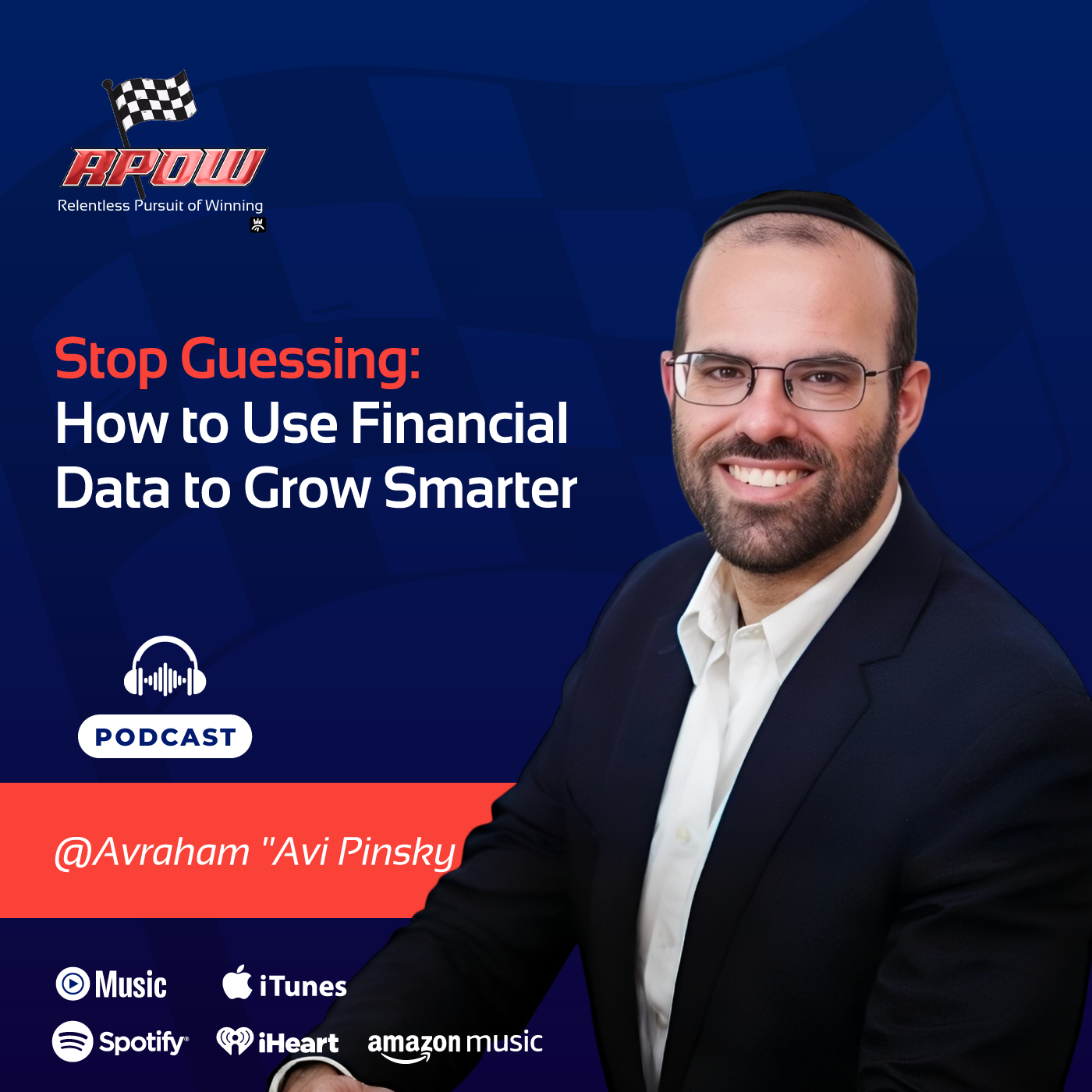
Stop Guessing: How to Use Financial Data to Grow Smarter
🔥 Excerpt
“ If the cash runs out, it does not matter how much revenue or profit you have.”
⚡ TL;DR
Financial data for business growth gives owners a way to connect past performance with future decisions. Avi Pinsky explains why understanding financial concepts matters, how cash flow shapes business health, how to evaluate investments in people and marketing, and how a simple scoreboard can keep priorities visible.
📄 Show Notes
A business owner can spend an entire week solving urgent problems without knowing whether the decisions being made are actually moving the company toward its goals. Financial data for business growth gives those decisions a reference point. The numbers are not the business itself. They are information that can help an owner understand what is happening and decide what deserves attention next.
What does a business owner actually need to understand about the numbers?
Avi Pinsky makes a useful distinction between knowing accounting and understanding the language of accounting. Owners do not need to become accountants, but they need enough financial literacy to understand concepts such as cost of goods sold, gross margin, revenue, profit, and cash flow. Without that foundation, important business decisions can happen without the owner fully understanding the information available to them.
How can financial data for business growth change the way an owner makes decisions?
Historical numbers become useful when they inform what happens next. Marketing spend, payroll, equipment, lead generation, conversion rates, and pricing can all be examined through the question of return. If an investment produces little measurable value, the owner has information to reconsider the decision. If it produces meaningful results, the data can help determine where additional attention belongs.
What is the difference between bookkeeping and financial decision support?
Bookkeeping records what happened. Pinsky describes his role as helping owners use that information to determine what should happen next. The distinction matters for a company with growth goals because historical reporting alone does not establish the path toward those goals. Financial data for business growth becomes useful when an owner can translate results into decisions and priorities.
How does cash flow change the conversation?
Revenue and profit can appear healthy while the cash available to operate the business remains constrained. Pinsky calls cash the bloodline of a business and emphasizes that owners need to understand what ultimately reaches the bank. Looking at cash flow alongside revenue and profit gives the owner a clearer view of the resources available to operate and invest.
How do you decide which financial lever deserves attention?
Pinsky recommends narrowing the field. His approach considers the different levers within a business and asks which one could make the greatest practical difference over the next thirty or sixty days. The goal is focused attention, followed by another review when the priority changes. Financial data for business growth becomes a working management tool when it helps determine where limited time and resources should go.
What role does the Prosperity Playbook play?
The Prosperity Playbook is a simple Excel workbook designed to establish business targets and monitor progress. Pinsky describes roughly fifteen high level numbers that can include revenue, cost of goods sold, payroll, marketing, and inventory where relevant. Owners can review those measures throughout the year, identify where performance is moving away from the target, and determine what deserves attention.
Where does AI fit into financial analysis?
Pinsky sees AI as a useful tool that still requires knowledgeable direction and review. An owner needs to understand the work being requested, provide appropriate guidance, and check the output. AI can extend existing skills, but it does not replace the judgment required to understand a business and evaluate the information produced.
What does the scoreboard have to do with winning?
The scoreboard gives the owner a visible way to track progress against defined targets. Pinsky describes using red, yellow, and green indicators to identify areas that need attention and areas where the business is meeting expectations. The larger point is simple: an owner needs to know the score before deciding what to improve next.
✅ Key Takeaways
- Learn the financial language of your business.
- Connect historical data to future decisions.
- Watch cash flow alongside revenue and profit.
- Measure the return on marketing, payroll, equipment, and other investments.
- Focus attention on one or two meaningful financial levers.
- Use targets and scorecards to maintain visibility.
- Treat AI as a tool that requires human judgment and review.
👑 Host Info
Rick Meekins (rickmeekins.com) is a serial entrepreneur, strategic business disruption advisor, podcast guest, and host of The Relentless Pursuit of Winning Podcast, where he explores what it actually takes to build, lead, and sustain meaningful businesses. With over 30 years of experience working alongside founders and leadership teams, Rick focuses on helping companies develop and implement disruptive advantages and developing platforms to explore and distribute human insight.
Interested in working together, having Rick speak, or partnering with the show?
Start here: RPOW Podcast Contact
🧭 Chapters
00:00 Why business owners need to understand the numbers
02:40 From accountant to Finance Doctor
06:46 Moving from operator to business owner
12:51 Learning the language of business numbers
17:22 Creating value customers will pay for
21:27 Bookkeepers, accountants, and forward planning
25:52 Measuring the return on business investments
27:16 Buying back an owner’s time
30:34 AI and financial analysis
35:51 Managing multiple business ideas
38:52 The Prosperity Playbook
42:16 Choosing the right financial lever
46:39 Building a business scoreboard
#businessfinance #financialdata #cashflow #businessgrowth #entrepreneurship #businessowners

Biography
Avi Pinsky, known as the Finance Doctor, helps business owners make better decisions using financial data rather than guesswork.
A former accountant and CPA, Avi moved away from tax and compliance work to focus on helping entrepreneurs understand the numbers behind their businesses. His work helps owners improve profitability, strengthen cash flow, evaluate investments, set practical targets, and build more sustainable companies.
Avi works with business owners who want to move beyond reacting to problems and begin using data to make intentional decisions about growth, pricing, hiring, marketing, and long-term goals.
Giveaway
🎁 Giveaway
Avi created the Prosperity Playbook, a simple Excel-based tool that helps to:
• Set annual business targets.
• Track key financial and operational measures.
• Identify the numbers that need attention.
• Focus on one or two high-impact improvements at a time.
• Use a red, yellow, and green scoreboard to measure progress.
Download it here: Prosperity Playbook | Pinsky Consulting
Other Information

Other episodes...