Innovation Strategy: Disrupt or Die | Danny Nathan
🔥 Excerpt
“What did the market get wrong and what are you going to do differently?”
⚡ TL;DR
Danny Nathan breaks down how founders can turn innovation from a slogan into a system. We talk about defining innovation in plain terms, building a culture that protects learning, using staged investment gates to test ideas fast, and designing disruption by challenging market assumptions.
📄 Show Notes
Innovation strategy starts when you stop treating innovation like a vibe and start treating it like work. Danny Nathan joined me to unpack why leaders say innovation matters but still fail to activate it inside the business. He walked through how innovation strategy begins with definition. If your team cannot explain what innovation means in your context, you end up chasing the bleeding edge with a structure built for quarterly efficiency.
We got practical about how innovation strategy becomes operational. Small experiments need small tranches of resources, clear hypotheses, and KPIs that fit the stage you are in, not the same metrics the core business lives on. Danny also reframed failure as a learning requirement. If leaders punish misses, innovation strategy collapses into silence, and the best ideas never leave someone’s head.
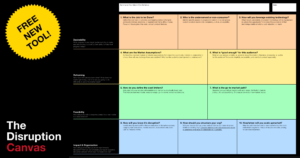
Then we went into disruption. Danny shared his Disruption Canvas as a way to surface market assumptions, find underserved users, and design a good enough first release that earns adoption and creates room to scale. If you want innovation strategy that holds up under pressure, this conversation gives you a grounded path to build it with discipline and integrity.
✅ Key Takeaways
- Innovation strategy starts with a clear internal definition, not a buzzword
- Protect learning by making it safe to test ideas responsibly
- Use staged investment gates tied to proof, not opinions
- Track progress with KPIs that match the innovation stage
- Disruption comes from challenging market assumptions and serving ignored users
👤 Bio
Danny Nathan is the founder of Apollo 21, an innovation and digital product design studio. He has spent two decades across brand, technology, and venture building, and created the Disruption Canvas to help teams design disruption intentionally.
👑 Host Info
Rick Meekins (https://rickmeekins.com) is a serial entrepreneur, strategic business disruption advisor, podcast guest, and host of The Relentless Pursuit of Winning Podcast, where he explores what it actually takes to build, lead, and sustain meaningful businesses. With over 30 years of experience working alongside founders and leadership teams, Rick focuses on helping companies develop and implement disruptive advantages and developing platforms to explore and distribute human insight.
Interested in working together, having Rick speak, or partnering with the show?
Start here: https://rpowpodcast.com/contact/
🧭 Chapters
00:00 Introduction to innovation and Danny’s background
03:48 The MoMA project and learning through experimentation
06:25 Building Apollo 21 and what the early days required
09:35 The sales challenge and being discoverable
12:06 Creating a culture of innovation
15:19 What innovation strategy means inside real organizations
17:57 Business impact and why activation matters
20:46 Innovation programs, testing, and gating investment
24:24 KPIs that fit innovation stages
25:41 Stages of the innovation process
27:36 Operationalizing proven ideas inside or outside the org
30:02 What disruption actually is
36:00 The Disruption Canvas explained
43:03 Fail beautifully and keep moving
45:09 Closing