





Listen...
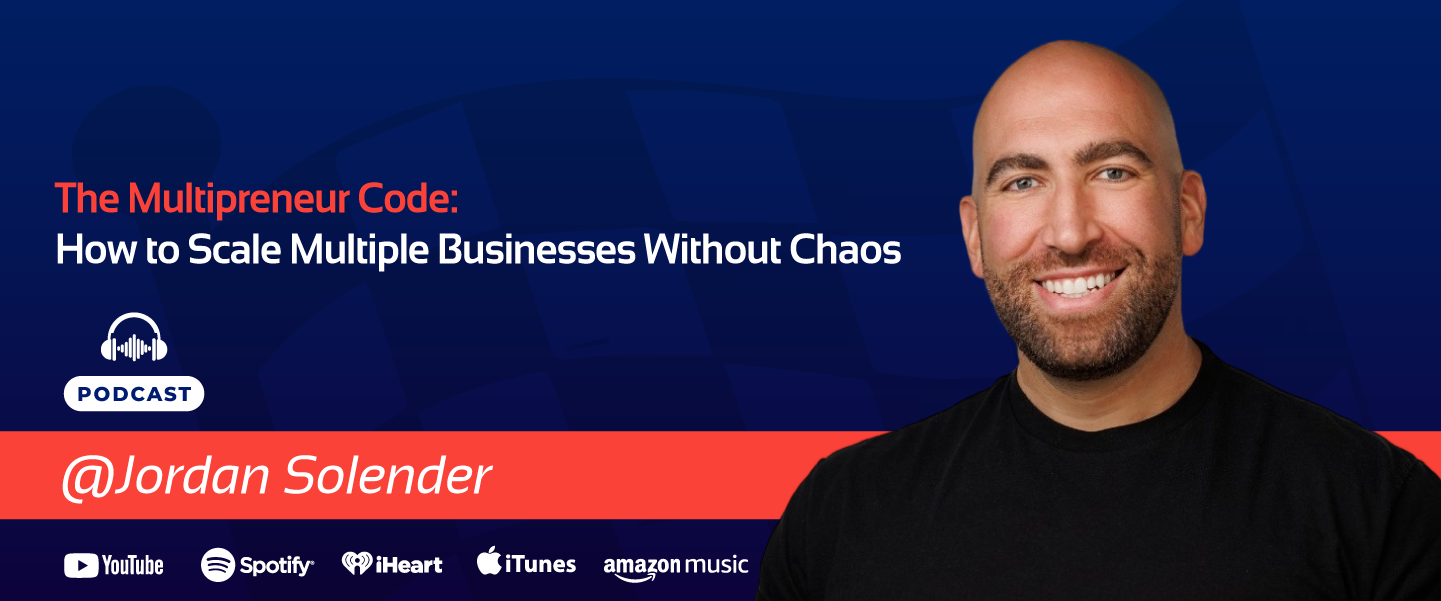
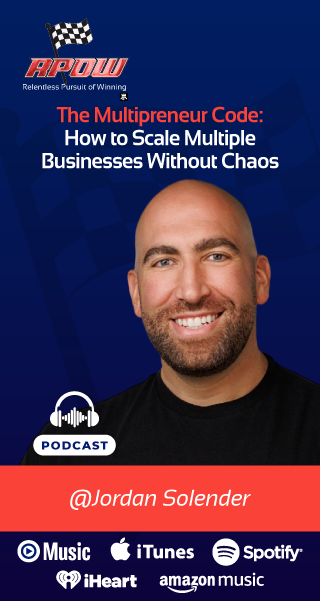
The Multipreneur Code: How to Scale Multiple Businesses Without Chaos
🔥 Excerpt
“Being a multipreneur for me is really being good about building businesses that don’t depend on me.”
⚡ TL;DR
Building and scaling multiple businesses requires a deliberate approach to people, processes, and accountability. Jordan Solender explains how documented systems, leaders who own outcomes, disciplined communication, and daily operating rhythms help founders reduce bottlenecks while building companies that can function without their constant involvement.
📄 Show Notes
Scaling multiple businesses brings a difficult question into focus: how much of the operation still depends on the founder? Revenue can grow while decisions, customer relationships, and everyday problems continue flowing through one person. Eventually, the founder becomes the constraint on the very businesses they are trying to grow.
Jordan Solender has built businesses across technology, events, and AI advisory, including an eight figure technology company exit. His experience has shaped a practical philosophy: document what good looks like, delegate responsibility, and build teams capable of owning outcomes.
What changes when you build multiple businesses?
Jordan describes a multipreneur as someone building several companies at once. That requires a different operating discipline. Being present in every meeting and knowing every customer may
work at a small scale, but it becomes impossible across multiple teams. The goal is to create businesses that operate through capable people and clear systems, with the founder providing direction and oversight.
Why does delegation break down?
Hiring someone to complete tasks does not automatically transfer responsibility. Jordan looks for people who return with an account of what happened, what they recommend, why they recommend it, and where they need support. That approach gives people room to exercise judgment and own results.
It also requires founders to accept that capable employees may solve problems differently. Jordan recalls wanting to automate an entire process until his team pointed out that preserving the final human touch could improve the customer experience. Their perspective changed the solution. Leadership requires enough humility to let good ideas come from someone else.
What makes growth sustainable?
Jordan distinguishes increasing revenue from building a company that can handle greater complexity. Sustainable scale depends on people, process, and accountability. As teams expand across locations and time zones, responsibilities must be explicit, processes documented, and communication intentional.
His daily practice brings key leaders from his companies together for a thirty minute video call. Each person raises pressing obstacles or confirms that their business is operating well against its key measures. The routine creates a reliable place to surface problems before they grow.
How do systems thinking and AI create capacity?
Jordan treats recurring problems as signals that a process needs attention. If a customer misses a follow up, the real question is why the system allowed it to happen. The answer might involve unclear ownership, a missing task, or an alert that never existed.
He applies the same discipline to AI. The starting point is a business problem, such as lengthy estimating workflows or missed leads, followed by a solution designed around a measurable outcome. Technology matters when it reduces friction, improves service, or frees people to do valuable work.
What makes a business ready for sale?
A buyer evaluates the future performance and risk of a company. Founder attachment and years of personal effort do not establish its market value. Buyers want predictable revenue, recurring customers, documented processes, strong management, and confidence that the company can continue without its owner.
Jordan recommends asking a difficult question early: what would worry a buyer if they examined the business tomorrow? The answers can guide the work required to build a durable company.
For founders scaling multiple businesses, operational freedom begins with one deliberate move: identify where the business still relies on you, then build the process and ownership needed to change it.
✅ Key Takeaways
- Document how each role should operate before delegating it.
- Hire for judgment and ownership, not task completion alone.
- Treat repeated mistakes as signals of a system problem.
- Establish communication rhythms that give leaders a clear path to raise obstacles.
- Evaluate AI by business outcomes, customer impact, and measurable value.
- Build transferability into the company long before considering a sale.
👑 Host Info
Rick Meekins (https://rickmeekins.com) is a serial entrepreneur, strategic business disruption advisor, podcast guest, and host of The Relentless Pursuit of Winning Podcast, where he explores what it actually takes to build, lead, and sustain meaningful businesses. With over 30 years of experience working alongside founders and leadership teams, Rick focuses on helping companies develop and implement disruptive advantages and developing platforms to explore and distribute human insight.
Interested in working together, having Rick speak, or partnering with the show?
Start here: https://rpowpodcast.com/contact/
🧭 Chapters
00:00 Building Multiple Businesses
02:34 Removing Founder Dependence
04:08 Hiring for Outcome Ownership
06:33 Keeping Human Judgment in Automation
07:59 From Snowblowers to an Eight-Figure Exit
11:22 The Hidden Work Behind an Exit
15:02 Getting a Business Sale-Ready
20:06 Growth vs. Scale: Accountability Matters
22:04 Delegating Founder-Led Sales
23:08 Fix the System, Not the Symptom
24:39 Leading Across Locations
26:09 The Daily Leadership Check-In
31:02 Business Problems Before AI Tools
34:25 Using AI for Construction Estimates
36:53 Five Pillars of Business Operations
39:47 Building Momentum Through Small Wins
#Multipreneur #BusinessSystems #Delegation #BusinessGrowth #RPOWPodcast #RelentlessPursuitOfWinning

Biography
Jordan Solender is an entrepreneur and business optimization expert who helps founder-led companies remove bottlenecks and achieve operational freedom. Known as The Bottleneck Breaker, Jordan’s work transforms overwhelmed operators into confident leaders with systems that scale. As the founder of IT Select, Solender Events, and Solender Capital, Jordan has generated over $40 million in revenue across multiple industries, with several successful exits including an eight-figure technology firm sale. He’s worked with industry leaders like Apple, Samsung, and the U.S. Department of Defense — as well as hundreds of entrepreneurs trapped in the day-to-day grind of their own businesses. His core philosophy is simple: “Pick one thing and remove yourself. ”
Through automation, delegation, and optimization, Jordan teaches founders how to escape being the limiter so their business can finally run — and grow — without them.
Other Information

Other episodes...