





Listen...
🔥 Excerpt
“Discipline is a byproduct of structure.”
⚡ TL;DR
Former professional basketball player and Work On Your Game® founder Dre Baldwin brings an athlete’s perspective to entrepreneurship and leadership. The conversation explores his “Third Day” mentality, self-discipline, measurable accountability, and how founders can build systems that support consistent execution while navigating new opportunities.
📄 Show Notes
Starting with enthusiasm is one thing. Delivering when the work becomes repetitive, the pressure increases, and nobody feels particularly motivated is another.
Dre Baldwin joins Rick Meekins on the Relentless Pursuit of Winning Podcast to explore a different approach to self-discipline: building structure around performance rather than relying on a daily surge of willpower.
Drawing on his transition from professional basketball to business, Dre connects personal standards with the responsibilities of leadership. His Work On Your Game approach brings together discipline, strategy, systems, and accountability to make execution less dependent on how someone feels on a particular day.
How did professional basketball shape Dre Baldwin’s approach to business?
Dre’s path to professional basketball required initiative. After playing Division III basketball and receiving little attention from professional teams, he learned to market himself, build relationships with agents, and create opportunities. That effort led to a nine year professional career across eight countries.
He began creating online content while still playing, initially sharing basketball training material. As his audience grew, people began asking about the mindset, confidence, and discipline required to perform. Those questions helped him recognize how the mental side of sports could apply to business leadership and execution.
What gives a personal brand a clear identity?
A recognizable brand needs a defined point of view. Dre emphasizes knowing who you are, who you serve, and what standards guide your work. Trying to appeal to everyone can leave a business without a clear identity.
Audience feedback can help shape a brand. Dre recommends publishing consistently, paying attention to what resonates, and learning from the response. That feedback should inform decisions without dictating the identity of the business.
How can leaders turn goals into reliable execution?
A goal needs a roadmap. Dre recommends working backward from the intended outcome, identifying the necessary steps, and setting constraints that focus attention. Too many options can create analysis paralysis and scatter resources.
For business teams, execution reliability requires measurable checkpoints. Dre uses a sales team as an example. Leaders can establish expectations for responding to leads, sending proposals, and following up. Those actions provide evidence about whether the process is being followed. If the team meets its activity standards and results remain weak, leadership can examine the market, prospects, or sales approach.
When should a founder delegate responsibility?
Delegation begins with identifying the work that genuinely requires the founder’s involvement. Dre encourages leaders to define critical steps and standards, then determine where another person can deliver an acceptable result.
Training matters. When Dre hired an executive assistant, he invested substantial time explaining the reasoning behind tasks so she could develop independent judgment. He also describes the value of documenting processes and using role play to prepare others for responsibilities such as sales.
The decision to delegate involves trade-offs. Founders need to determine which activities require their personal attention and which can be performed reliably by someone else.
Why do business owners need to make time for marketing and sales?
Dre observes that owners can become absorbed in the craft they deliver. Their expertise is important, yet a business also depends on positioning that expertise, building relationships, and bringing its value to the right people.
He recommends looking at where the best clients originated. If referrals, publications, or email relationships consistently produce strong opportunities, the business can examine those conditions and develop a repeatable approach. The process should fit the owner’s strengths and the way trust is built with prospective clients.
What does the Third Day teach about consistency?
The Third Day is the point when the excitement of a new pursuit has passed and the work becomes demanding. It can arrive on the third day, month, or year. The principle is to keep showing up and delivering through the interference.
Dre connects professional performance to the willingness to do the work even when motivation is absent. The deeper question is what matters enough to make discomfort worth enduring. He calls that purpose the anchor.
How does structure create self-discipline?
Dre defines discipline as a byproduct of structure. Structure establishes instructions, rules, standards, enforcement, and correction. When those conditions are clear, people have a practical framework for consistent behavior.
For founders, this puts self-discipline within reach of daily business decisions. Priorities, processes, accountability, and standards can be designed deliberately. Outcomes remain uncertain, but leaders can shape the conditions and execution that give their organizations the best opportunity to perform.
✅ Key Takeaways
• Define the outcome and work backward to establish the necessary steps.
• Use constraints to focus attention and reduce competing priorities.
• Measure leading activities so execution problems become visible early.
• Establish clear standards before delegating responsibility.
• Train people to understand the reasoning behind their work.
• Build marketing and sales processes around the ways strong client relationships develop.
• Identify a meaningful purpose that sustains effort through difficult periods.
• Treat self-discipline as a structure that can be designed, practiced, and maintained.
👑 Host Info
Rick Meekins ( https://rickmeekins.com) is a serial entrepreneur, strategic business disruption advisor, podcast guest, and host of The Relentless Pursuit of Winning Podcast, where he explores what it actually takes to build, lead, and sustain meaningful businesses. With over 30 years of experience working alongside founders and leadership teams, Rick focuses on helping companies develop and implement disruptive advantages and developing platforms to explore and distribute human insight.
Interested in working together, having Rick speak, or partnering with the show?
Start here: https://rpowpodcast.com/contact/
🧭 Chapters
01:24 Dre’s Journey: Basketball to Business
05:17 Building an Authentic Personal Brand
07:27 Defining Who Your Brand Is For
09:28 Listening Without Losing Your Direction
11:58 Constraints and Focused Execution
14:12 Measuring Execution Reliability
17:30 Discovering Entrepreneurship
20:04 Turning Knowledge Into Products
23:47 Training People to Think Independently
26:25 Setting Standards and Delegating
29:13 Helping Founders Release Control
32:54 Marketing, Sales, and Business Growth
37:44 Authenticity and Long-Term Trust
40:21 The Third Day
42:06 Why Motivation is Not Enough
44:51 Structure as the Foundation of Discipline

Biography
Dre Baldwin is the founder of Work On Your Game®, an execution operating system for executives, business owners, and performance driven organizations. A former nine year professional athlete, Dre has authored 43 books, delivered four TEDx Talks, and produced more than 3,300 episodes of his Work On Your Game MasterClass. His work has reached more than 100 million people worldwide. Today, he helps leaders strengthen execution reliability, strategic clarity, and executive presence through structure and measurable standards.
Giveaway
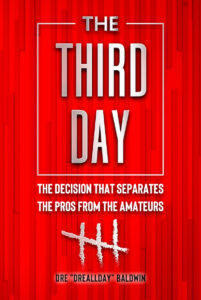
Dre is offering a copy of The Third Day: The Decision That Separates The Pros From The Amateurs at ThirdDayBook.com. The book is free; shipping charges apply.
Other Information

Other episodes...