





Listen...
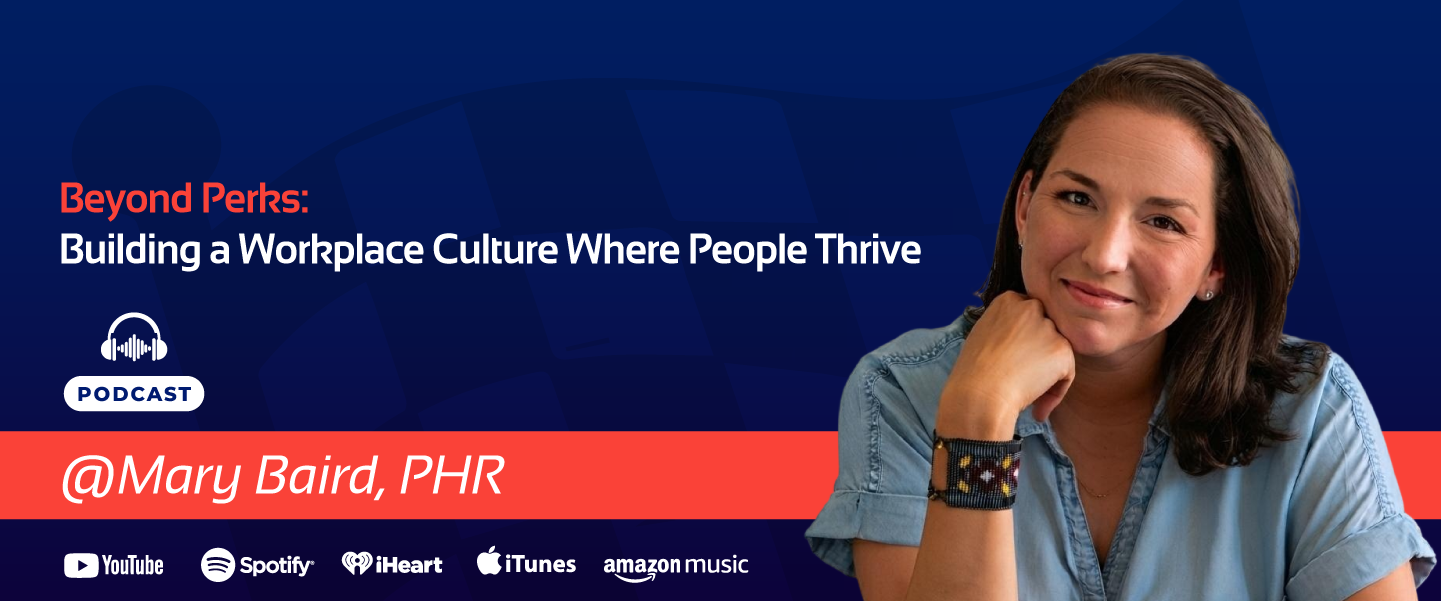
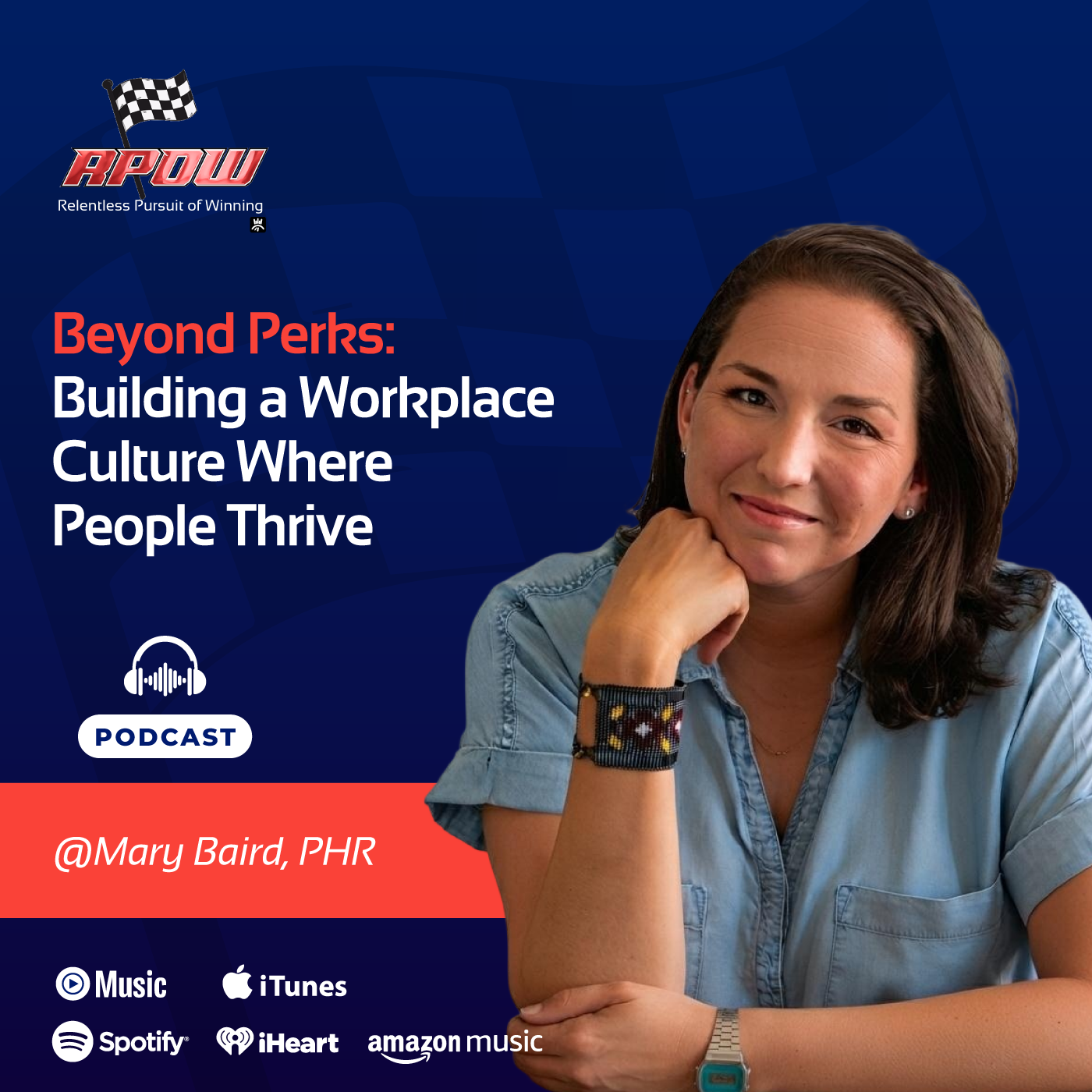
Beyond Perks: Building a Workplace Culture Where People Thrive with Mary Baird
🔥 Excerpt
“Better employee experience equals better customer experience, which equals better business results.”
⚡ TL;DR
A healthy workplace culture is built through the everyday experience of employees. Mary Baird explains why leaders need to listen to their workforce, respond to what they hear, equip people to do meaningful work, and create conditions where employees can feel satisfied and take pride in their contributions. These practices influence retention, customer relationships, and business performance.
📄 Show Notes
Workplace culture is shaped by what people experience when they show up each day. Employees can hear messages about teamwork, purpose, and performance, yet still face unreasonable expectations, disengaged managers, unnecessary bureaucracy, and uncertainty about their future. Perks cannot resolve those underlying conditions.
Mary Baird, PHR, founder of The Simplifiers, has spent more than 18 years working in leadership development, employee experience, and workshop facilitation. Her work centers on a practical premise: organizations need to understand what their people experience before they can improve how the organization performs.
Why does workplace culture require attention from leadership?
Mary describes a cycle many organizations have experienced since the pandemic. Companies raised revenue expectations, pushed employees to remain constantly available, and placed greater demands on teams. When targets were missed, layoffs followed. Remaining employees inherited additional responsibilities while carrying uncertainty about their own positions.
That environment creates disengagement and burnout. Managers feel the pressure, their teams absorb it, and customer experience eventually suffers. Mary offers a clear business principle: better employee experience supports better customer experience, which supports stronger business results.
What does meaningful employee listening look like?
Listening requires leaders to ask direct questions and take the answers seriously. Mary recommends starting with two:
What is broken here at this organization?
How would you fix it?
The second question matters because employees often understand operational problems that senior leaders cannot see. A frontline employee may know why equipment arrives late, why customer handoffs fail, or why a routine process creates unnecessary frustration.
The responsibility continues after the survey. Leaders need to communicate what they heard, what they changed, and what comes next. This closed loop builds credibility over time. Employees learn that speaking honestly can lead to action.
How can leaders create a workplace where people want to contribute?
Employee satisfaction grows when people feel equipped to do work they can take pride in. Mary encourages organizations to invest in practical development and tools, including responsible training in AI and automation.
Technology can reduce repetitive tasks and give employees room to focus on higher value work. That requires leaders to rethink job responsibilities and help people understand how their contributions can develop as work changes.
A workplace does not need an elaborate collection of perks to demonstrate care. Employees need meaningful responsibilities, useful tools, clear expectations, and managers who recognize their capabilities.
What should small business owners consider when building a team?
Mary’s entrepreneurial experience offers a useful lesson about hiring. In the early years of The Simplifiers, she tried to hire people who resembled her. She eventually recognized that a team of similar strengths would carry the same blind spots.
Her advice to first time employers is to find someone whose skills and perspective complement their own, someone who believes in the direction of the business and can strengthen areas the founder does not naturally cover.
She also encourages owners to examine why they want to grow. A larger organization brings payroll obligations, overhead, and management complexity. Growth should support the work the owner wants to do and the business they want to sustain.
What does it mean for people to thrive at work?
Mary distinguishes lasting satisfaction from the pursuit of constant happiness. People experience difficult days and changing circumstances. Leaders can still create an environment where employees find meaning in their responsibilities, feel connected to their work, and have the opportunity to contribute.
That begins with treating people as the organization’s greatest asset. It also requires leaders to take care of themselves. Mary emphasizes daily movement, sleep, hydration, nourishment, and mental health as practical foundations for sound decisions and sustained leadership.
A workplace where people thrive is built through consistent choices. Listening, responding, equipping, and developing employees are operational responsibilities with human consequences.
✅ Key Takeaways
- Engagement events and perks need to support a broader employee experience strategy.
- Customer experience depends partly on whether employees are equipped to deliver it.
- Ask employees what is broken and how they would fix it.
- Frontline perspectives can reveal operational problems leaders do not see.
- Close the feedback loop by explaining what changed and what happens next.
- Build trust through repeated listening and visible follow-through.
- Pair AI adoption with training and thoughtful changes to responsibilities.
- Hire people whose strengths complement the founder’s capabilities.
- Design the organization around its purpose and needs, not appearances.
- Focus on meaningful work and satisfaction rather than constant happiness.
- Treat leadership wellbeing as part of sustaining the business.
👑 Host Info
Rick Meekins (https://rickmeekins.com) is a serial entrepreneur, strategic business disruption advisor, podcast guest, and host of The Relentless Pursuit of Winning Podcast, where he explores what it actually takes to build, lead, and sustain meaningful businesses. With over 30 years of experience working alongside founders and leadership teams, Rick focuses on helping companies develop and implement disruptive advantages and developing platforms to explore and distribute human insight.
Interested in working together, having Rick speak, or partnering with the show?
Start here: https://rpowpodcast.com/contact/
🧭 Chapters
00:00 The realities of modern workplace culture
01:28 Mary Baird’s path to The Simplifiers
04:16 The changing nature of work
05:55 Curiosity and the entrepreneurial journey
07:14 Creating connection through intentional experiences
11:01 Building trust and earning referrals
14:43 Why traditional workplace expectations are failing
19:11 Employee experience and business performance
21:39 Listening to employees and rebuilding trust
26:37 Building engagement through consistent action
27:38 Preparing teams for AI and changing work
33:26 Hiring and developing talent in small businesses
35:58 Building a team that fills your blind spots
37:21 Rethinking growth and business overhead
38:59 Why satisfaction matters more than constant happiness
41:55 Investing in people as the greatest business asset
42:48 Defining the feelings that guide meaningful work
45:49 The practical value of Squash the Sunday Scaries
47:05 Taking care of yourself as a leader
#WorkplaceCulture #EmployeeExperience #EmployeeEngagement #Leadership #RPOWPodcast #RelentlessPursuitOfWinning

Biography
Mary Baird, PHR has one goal in mind…to help people simplify their lives.
With over 18+ years experience in leadership development, employee experience, and as an international workshop facilitator, she helps medium to large corporations who are struggling with high turnover and low employee engagement to better navigate the ever-changing world of work by SIMPLIFYING.
She is here today to simplify how to create a better employee experience at your organization and help you become a hero in your workplace.
She is also the host of The Simplifiers Podcast, where she simplifies work, life, and everything in between. Her podcast has thousands of devoted listeners in over 155 countries around the world and is rapidly growing!
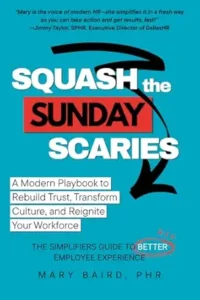
Her new book, Squash the Sunday Scaries: A Modern Playbook to Rebuild Trust, Transform Culture, and Reignite Your Workforce – The Simplifiers Guide to Better Employee Experience is out now and available for purchase on Amazon, at Barnes & Nobles, and your favorite independent bookstore. She’s also been published in Forbes magazine, Newsweek, Huffington Post, MSN, The Times, Metro and featured as one of the “Top 25 Young Event Pros to Watch” by Special Events Magazine. Visit www.thesimplifiers.com to listen to the podcast and get connected!
Visit www.squashthesundayscaries.com to learn more about the book
Other Information
Hire Mary to Speak — www.marybaird.co
Buy the Book: Squash the Sunday Scaries — The Simplifiers Book
Other episodes...