




Listen...
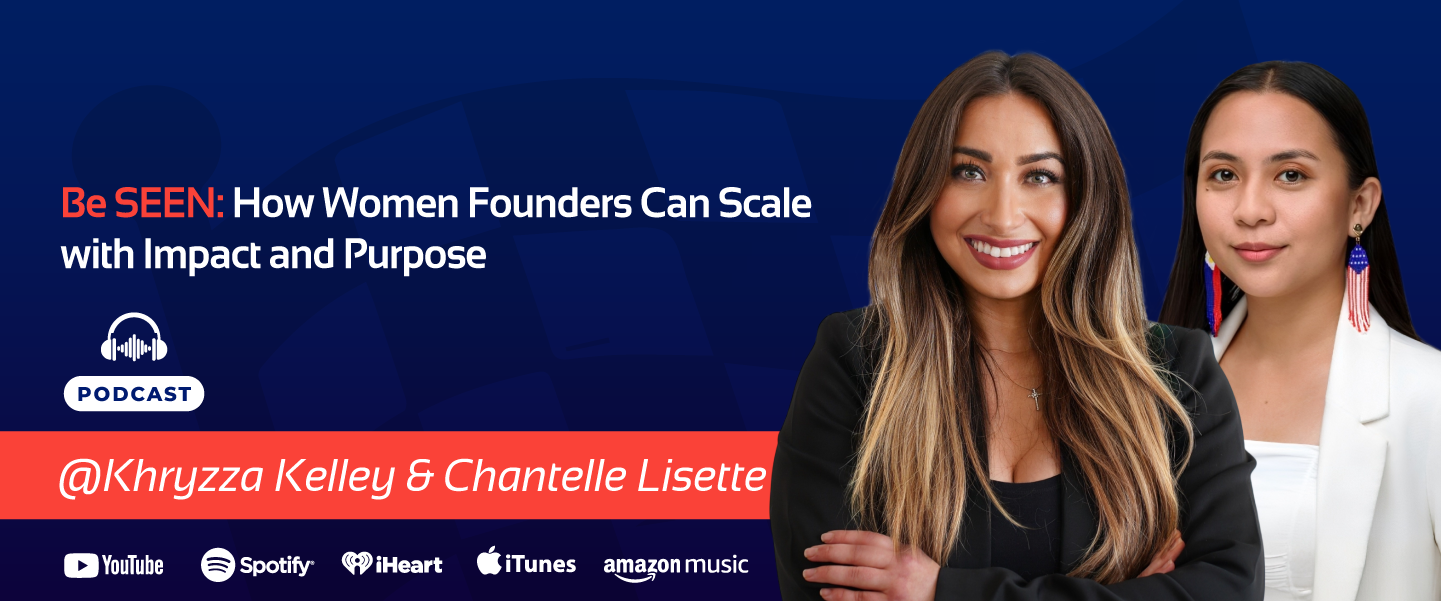
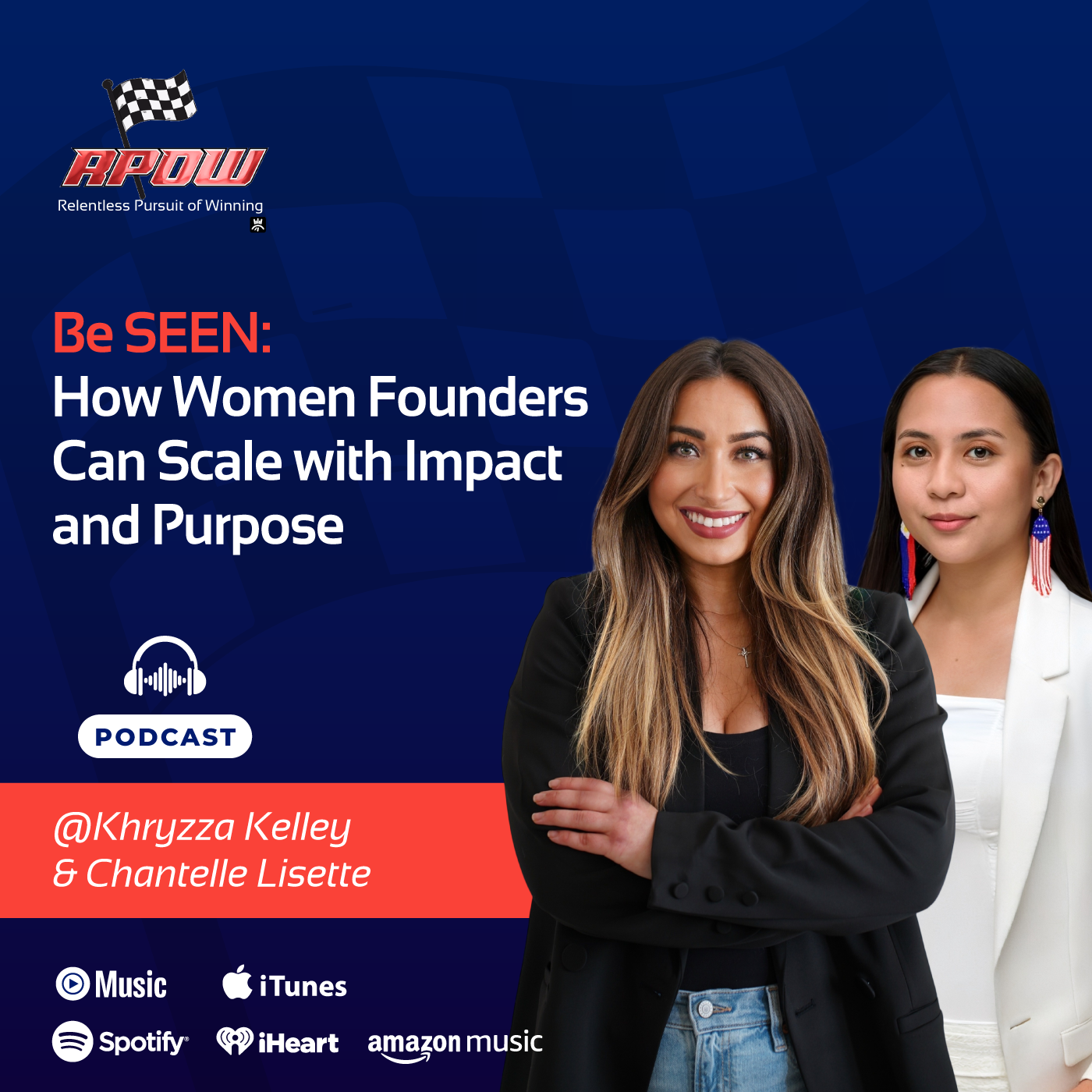
Be SEEN: How Women Founders Can Scale with Impact and Purpose
🔥 Excerpt
“Self-worth is a muscle and we want to grow it.”
⚡ TL;DR
Khryzza Kelley and Chantelle Lisette connect the practical work of scaling a business with the personal work of leading it. They explore self-worth, delegation, purposeful growth, and the relationships that help women founders move beyond doing everything themselves.
They also introduce SEEN, a November 11 mastermind in Anaheim where women founders work through growth decisions in three curated small-group sessions, followed by a wellness and connection evening.
📄 Show Notes
You have built a business and know it can do more. But the next stage may require you to speak more publicly, trust other people with important work, or pursue a bigger opportunity before you feel fully ready.
For women founders navigating those decisions, business strategy is only part of the conversation. Khryzza Kelley and Chantelle Lisette bring together two complementary areas: building the people and operations that support growth, and developing the confidence to lead that growth without losing yourself in it.
How can women founders become more visible without letting other people’s opinions direct their business?
Chantelle works with women who want to share their expertise but hesitate when an opportunity puts them in front of others. The concern is not always knowing what to say. It can be worrying about how they will be received.
She shares the example of a community member who wanted to speak publicly but initially struggled even to participate confidently on calls. Through coaching, preparation, and work on her self-talk, she progressed to delivering a keynote and pursuing further speaking opportunities.
Chantelle’s emphasis is on following your own direction rather than measuring every decision against someone else’s approval. Visibility becomes a way to contribute, not a test of whether everyone accepts you.
What if the usual advice about scaling does not fit the company you want to build?
Khryzza did not want outside equity investment to be the starting point for her business. She also found that familiar conversations about scaling did not fully reflect the way she and other women founders wanted to grow.
Her experience led her toward a people-centered approach built through clients, advocates, mentors, and trusted relationships. She does not present this as the only path, but as an alternative for founders who want to grow while retaining ownership and staying connected to their purpose.
The useful question is not simply how other companies scale. It is which approach fits the business, its resources, and the founder’s intentions.
Can a founder pursue greater profit without compromising her mission?
Khryzza challenges the idea that purpose and financial ambition must sit on opposite sides of a decision. She describes “millionaires and missionaires” as founders who build resources while expanding the contribution their businesses make.
For her, purpose is not limited to donating money after it has been earned. It also shapes how teams are built, how people are paid, and how clients are served.
That makes growth a conversation about both resources and responsibility. A larger business can extend a mission, but the way it grows needs to remain consistent with that mission.
How can women founders move from doing everything to leading other people?
The role that gets a business started can become too small for what it needs next. Khryzza describes scaling as an ongoing change in the founder’s identity and responsibilities.
Letting go means allowing others to contribute to the mission, not merely giving them a list of tasks. It also means accepting support rather than assuming the founder must remain involved in everything.
This is where the guests’ work overlaps. Operational advice alone may not resolve the discomfort of sharing control.
The founder also needs confidence in her ability to lead differently and make room for people whose contribution will change the business.
How can founders set boundaries without falling into people-pleasing?
Chantelle describes how concern about others’ reactions can influence the way women communicate, respond to requests, or present themselves. Her approach is to pause and consider whether a response reflects the person and leader they want to become.
Khryzza adds a business filter: a clear vision should guide hiring, investments, client commitments, and opportunities.
Not everything that is available belongs in the next stage.
Together, those perspectives make boundaries more purposeful. Saying no is not only about protecting time. It is about deciding where attention and responsibility belong.
How can a woman founder protect her identity when business results become personal?
Chantelle asks women to consider who they are without their company, audience, or social media following. If that question is difficult to answer, she sees it as a reason to invest attention in the person outside the business.
Her work includes separating facts from interpretations. A disappointing result is something that happened. Treating it as proof that you are incapable or unworthy adds a conclusion that may not be justified.
She also makes personal time a practical commitment. Journaling, a walk, quiet reflection, or another activity outside work goes on the calendar rather than waiting until the business needs nothing more.
What happens when loyalty to a partner or team member conflicts with the business’s direction?
Khryzza shares the difficulty of ending a business partnership with someone who had been a friend for more than a decade. She also discusses the emotional challenge of parting with people she had hired with the hope of growing together.
Her experience highlights a distinction between caring about someone and remaining aligned in business. A shared history does not automatically mean the partnership still supports the company’s future.
For founders whose businesses are closely tied to relationships and purpose, those decisions can be especially personal. Khryzza’s focus is on recognizing the discomfort and making a considered decision rather than avoiding it indefinitely.
What should women founders look for in a supportive business community?
The guests describe community as more than encouragement. It can provide relevant experience, honest perspective, practical resources, and relationships with people who understand the challenges ahead.
Chantelle’s She Is Worthy community emphasizes self-worth, connection, and an optional faith element. Khryzza seeks mentors who have already achieved outcomes she wants to work toward and can help her recognize what she is missing.
Their shared SEEN initiative brings those needs together. It is designed for founders who want to work on both how they lead and how their businesses scale, rather than treating confidence and strategy as separate subjects.
How can founders keep progressing without making every setback an emotional crisis?
Khryzza describes learning to respond more steadily to both success and disappointment. She wants her leadership to remain dependable rather than rise and fall with each business result.
Chantelle returns to staying grounded and defining progress personally. Showing up, continuing after rejection, and maintaining a sense of worth outside the company are part of that practice.
Their shared message is that ambition needs support. A clear direction, useful relationships, and regular attention to yourself can help you lead the next stage without allowing the business to become your entire identity.
✅ Key Takeaways
- Visibility can be a way to share expertise rather than seek universal approval.
- Choose a scaling approach that fits your business and ownership goals.
- Financial ambition and a meaningful mission do not have to compete.
- Ethical growth includes how people are treated, not only how profits are used.
- Delegation requires a change in the founder’s role as well as operational structure.
- Use a clear vision to guide commitments and boundaries.
- Keep personal worth separate from business results and audience metrics.
- Address partnership misalignment even when there is a long personal history.
- Seek communities that combine encouragement with relevant experience and practical support.
- Develop steadier responses to wins and setbacks.
- Make self-investment a regular commitment, not a reward postponed until everything else is done.
👑 Host Info
Rick Meekins (https://rickmeekins.com) is a serial entrepreneur, strategic business disruption advisor, podcast guest, and host of The Relentless Pursuit of Winning Podcast, where he explores what it actually takes to build, lead, and sustain meaningful businesses. With over 30 years of experience working alongside founders and leadership teams, Rick focuses on helping companies develop and implement disruptive advantages and developing platforms to explore and distribute human insight.
Interested in working together, having Rick speak, or partnering with the show?
Start here: https://rpowpodcast.com/contact/
🧭 Chapters
00:52 Welcome and introduction
01:32 Chantelle’s mission and She Is Worthy
02:08 Khryzza’s work with women founders
04:33 Chantelle’s personal journey
07:30 Khryzza’s experience scaling CoWorq
11:50 Helping women find their voice
15:07 Separating facts from the stories we tell ourselves
21:33 Building a community through uncertainty
25:45 Relationships, rejection, and lessons learned
30:43 Identity beyond business results
33:05 Making time for yourself
35:28 Confidence and the fear of being seen
36:58 What to expect from SEEN
40:57 Recognizing the patterns behind progress
42:28 Building emotional steadiness
43:31 Staying grounded through setbacks
44:43 SEEN registration information
45:28 Scheduling time to invest in yourself
46:28 Making a decision about the future you want
#WomenFounders #WomenEntrepreneurs #PurposeDrivenBusiness #BusinessGrowth #RPOWPodcast #RelentlessPursuitOfWinning
Biography
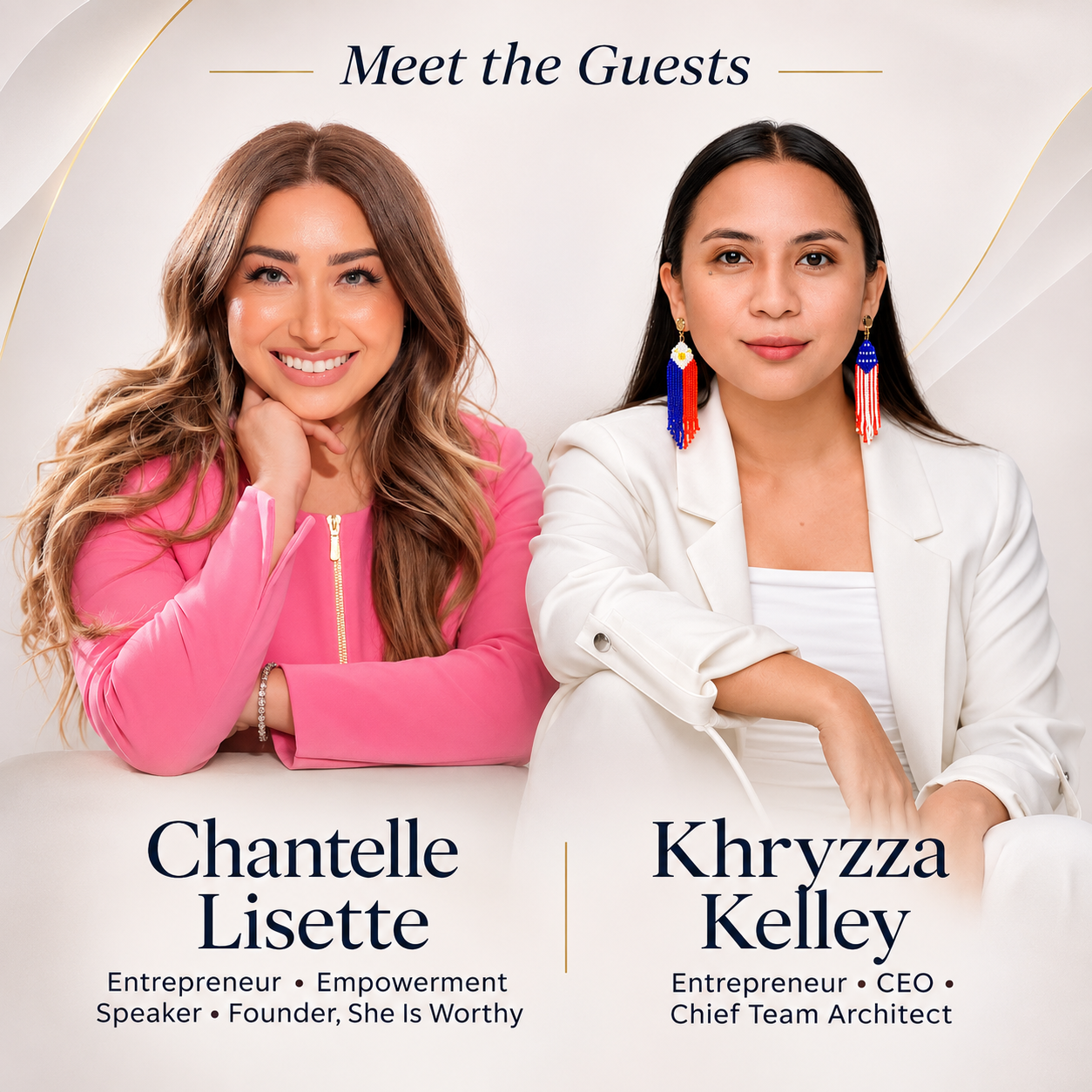
Khryzza Kelley is a multi-awarded entrepreneur, CEO and Chief Team Architect of CoWorq, and founder of On Fridays, We Scale. She grew CoWorq from three people to 300 and helped the company achieve significant growth in profit, clients, and jobs. CoWorq has served more than 200 businesses and built over 300 roles. Khryzza is the eWomenNetwork 2025 Emerging Leader of the Year and a 2026 Inspire 100 awardee. Her work helps women founders scale profit, reach, and opportunity through ethical, people centered business practices.
Connect with Khryzza:
Website
Instagram
LinkedIn
Chantelle Lisette is an award-winning entrepreneur, empowerment speaker, podcast host, and founder of She Is Worthy, a global women’s community built around faith, connection, and sisterhood. With more than a decade of experience in sales, marketing, and leadership, she is a four-time President’s Club award winner and recognized as one of the Top 20 Trailblazing Women. Her mission is to help one million women recognize their worth, build meaningful connections, and create lives they love.
Giveaway
To request the free pass to the SEEN Mastermind AfterSEEN Call, email
Note: This is the separate giveaway supplied for the episode, not a confirmed free ticket to the in-person mastermind.
Other Information
📅 SEEN Mastermind: Event Details and Sign-Up
SEEN is a working mastermind for women founders who want to grow their businesses while developing the confidence, leadership, and team structure needed for the next stage. Presented by On Fridays, We Scale and She Is Worthy, the event combines small-group business work with opportunities for connection and reflection.
Date: November 11, 2026
Venue: The Colony House, Anaheim, California
How to Sign Up
Visit the SEEN event page and select “Claim my seat” to review registration availability and payment details.
Other episodes...