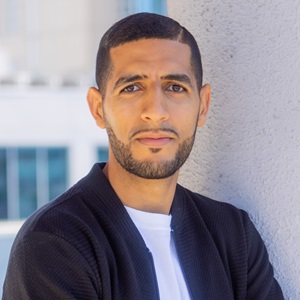
Karim Abouelnaga is a vanguard and catalyst for change in urban education. He was raised by a single mother on government aid and went through some of NYC’s most struggling public schools, however, he was fortunate to have a series of nonprofits and mentors who changed his life trajectory. He received over a quarter million dollars in scholarships to make his education possible. Karim founded PRACTICE in his Cornell dorm room at 18 and has dedicated his career to equitably leveling the playing field for low-income children and closing the opportunity gap.
He is a TED Fellow, Echoing Green Fellow, and the author of two books: Breaking Through from Rough to Ready and The Purpose-Driven Social Entrepreneur. At 23, Karim was named to Forbes’ 30 under 30 list in Education, and at 24 was named to Magic Johnson’s 32 under 32 list. His TED Talk was named one of the 9 Most Inspiring Talks of 2017, and his Forbes day-in-the-life feature is one of Forbes’ most viewed videos of all time garnering 4.5 million views. To help others accelerate their learning and continue learning on purpose, Karim publishes a free weekly newsletter titled The Learning Loop. He earned a Bachelor’s in Hotel Administration from Cornell University and a Master’s in Education Policy from Columbia University.