





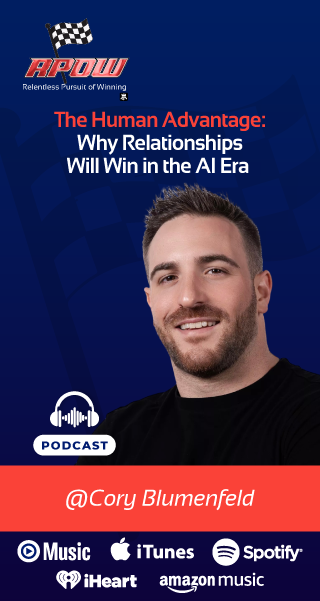
Listen...
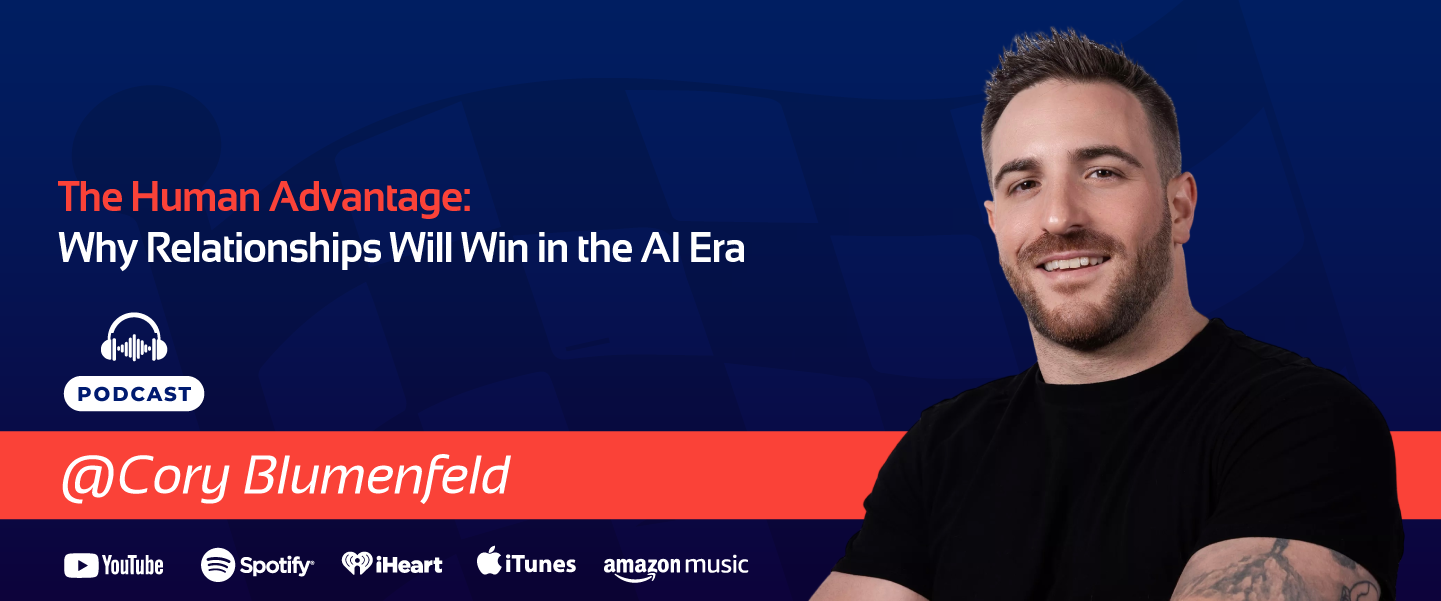
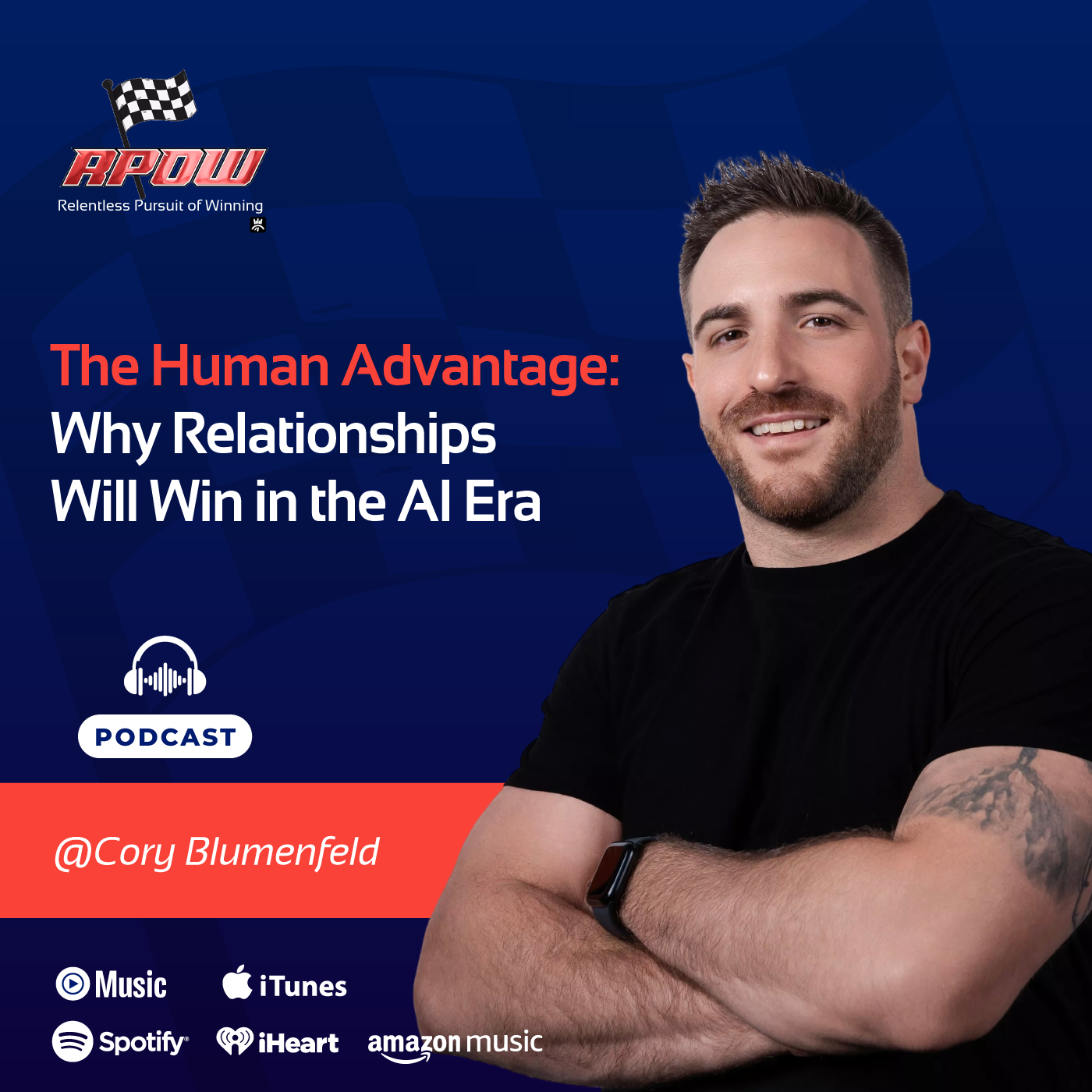
The Human Advantage: Why Relationships Will Win in the AI Era
🔥 Excerpt
“The human experience becomes a premium tier.”
⚡ TL;DR
Cory Blumenfeld explores why human relationships remain important as businesses adopt AI. Drawing on his experience building and exiting two healthcare technology businesses and developing a virtual talent company, he shares how trust, communication, thoughtful hiring, and continuous learning can help businesses combine technology with a better human experience.
📄 Show Notes
A business can automate almost everything around a customer and still lose the customer.
That tension sits at the heart of what Cory Blumenfeld sees happening right now. AI can write, organize, build, answer, summarize, and increasingly handle work that once required another person.
At the same time, people are becoming more sensitive to experiences that feel automated.
Cory has spent his career building companies, learning industries he knew little about, and figuring things out while moving forward. His current company, BlueMoso, connects business owners with virtual talent, which puts him in an interesting position. He is building a company around technology and distributed work while becoming increasingly convinced that the human relationship is where much of the real value lives.
What does it mean to build a company when you do not know everything?
Cory’s entrepreneurial story did not begin with expertise. He initially thought he would become a doctor because he wanted to help people. An entrepreneurship professor helped him see that building a company could give him another way to create that kind of impact.
He went on to build and exit two healthcare technology businesses, then entered an entirely different space with BlueMoso. The common thread was curiosity. Cory describes himself as someone who needs to understand why. He has repeatedly entered industries without knowing everything about them and learned along the way.
For a founder, that willingness to learn matters because the business rarely arrives as a finished system. You build, discover what you misunderstood, make adjustments, and keep moving.
How did a virtual assistant become the beginning of BlueMoso?
After his exits, Cory started putting himself out into the world through LinkedIn and content. He brought on his first virtual assistant, Cha, and their relationship became much bigger than a simple working arrangement.
People around Cory began asking how he had found someone he trusted. They were dealing with assistants who disappeared, difficulty creating processes, and uncertainty about finding the right person. The opportunity became personal when Cory saw what the work meant for Cha. When they started, she was living with her husband, children, and father in law in a one bedroom home. Two years later, she had her own house, a car, help around the house, and children in a good school.
That story still sits underneath Cory’s motivation for BlueMoso. The business is about getting work done, but there are people on the other side of that work whose lives can change because of the opportunity.
What happens to human work when AI can do more?
Cory does not see AI simply as a replacement story. He sees a question emerging around what humans should actually spend their time doing.
He points to work that can feel repetitive and unfulfilling, then considers what happens when technology removes some of that burden. The opportunity may be in retraining people for work that requires judgment, creativity, relationships, and deeper human involvement.
He uses IKEA as an example of this possibility, describing how employees whose customer service work became automated were retrained into interior design roles because of the knowledge they already carried. That changes the conversation around AI. The question becomes what people can do with the capacity technology gives them.
Can a one person business still deliver a human experience?
A founder can build an impressive amount alone with today’s technology. Websites can be created quickly. Content can be produced. Processes can be automated. AI can extend what one person is capable of doing.
Cory still sees a limit around the customer experience. A business can have one person behind it and still need someone who understands the customer, recognizes emotion, communicates naturally, and creates trust. That is part of the reason BlueMoso exists. The goal is not simply to give a founder more hands. It is to connect that founder with the right person for the way they actually work.
Why does the right person matter so much?
Skills can tell you whether someone is capable of doing a job. They don’t always tell you how well two people will work together.
That becomes especially important in roles built around frequent interaction. How someone communicates, responds to feedback, approaches decisions, and organizes their work can shape the relationship just as much as their experience. A person can have every qualification on paper and still struggle when those working styles don’t align.
The fit isn’t about having identical personalities or agreeing on everything. It’s about being able to understand each other, discuss differences openly, and build a rhythm that works for both sides.
An employee isn’t simply a set of skills hired to complete a list of tasks. They bring their own ambitions, expectations, responsibilities, and life outside work. The employer brings their own needs and ways of working, too. A strong working relationship makes room for both.
BlueMoso initially matched people according to skill. Cory’s team eventually noticed something important. Some people had the skills on paper and still struggled because the relationship with the client did not work. They began looking at personality, communication style, and work style. The fit became part of the equation.
What does trust have to do with all of this?
Cory sees business as one continuous exercise in building trust. Customers trust companies. Teams trust leaders. Partners trust each other. Audiences trust people who consistently provide something useful.
He believes trust grows through value. That can happen through a useful piece of content, a conversation, a referral, a strong client experience, or simply doing what you said you would do.
His own team reflects this philosophy. Cory wants people to challenge him when an idea is not right. He has had to teach his team how to push back by asking questions such as why something matters, when it actually needs to be done, and whether it is truly a priority.
That kind of trust gives a team room to think.
What happens when AI starts making decisions for people?
Cory sees a real risk when people stop using judgment and simply accept whatever AI produces.
AI can help create a document, develop an idea, or accelerate a process. The responsibility for deciding whether the output is actually good still belongs to the person using it.
For Cory, that means learning how to orchestrate AI rather than handing over judgment to it. He has seen the consequences when people become comfortable producing material that feels artificial, generic, or disconnected from the people receiving it.
Why might the human relationship become more valuable as AI improves?
Cory describes the human experience as becoming a premium tier.
When an interaction is completely automated, customers can usually understand why. It is efficient. It costs less. It handles volume. Yet there are moments when people simply want to reach another person who understands what they are trying to accomplish.
Cory also points to the imperfections of human communication as part of its value. AI can be remarkably polished, but real people bring timing, personality, emotion, spontaneity, and the unexpected moments that make an interaction feel genuine.
How do you build relationships when everything feels automated?
Cory has been going back to the basics.
He is using LinkedIn, Substack, podcasts, live conversations, and useful content to create actual relationships with people. Access to other people has never been easier, but access is not the same thing as connection.
The relationship still requires something useful to pass between people. A conversation needs value. Content needs value. Collaboration needs value. Trust develops over time through those repeated exchanges.
For Cory, that is where the human advantage becomes practical. Technology can make it easier to reach someone. The relationship still has to be built by people.
What does the future of business look like when AI and humans work together?
Cory’s answer is not a world without people. It is AI plus the right humans.
The technology can take repetitive work off someone’s plate and increase their capacity. The human can spend more time on the parts of the business that require judgment, relationships, creativity, leadership, and care.
That creates a different question for founders. Instead of asking only what can be automated, they can ask what should remain deeply human.
For Cory, that question reaches beyond efficiency. It is about building companies where technology gives people room to do work that matters and where relationships remain part of the value a business creates.
✅ Key Takeaways
- AI can increase human capacity without removing the need for human judgment.
- Trust is built through consistent value and meaningful interaction.
- Hiring for personality, communication, and work style can matter as much as skill.
- Founders need teams that feel safe enough to question their ideas.
- Automation creates an opportunity to rethink what work is actually worth doing.
- Human relationships in the AI era can become a meaningful source of business value.
👑 Host Info
Rick Meekins is a serial entrepreneur, strategic business disruption advisor, podcast guest, and host of The Relentless Pursuit of Winning Podcast, where he explores what it actually takes to build, lead, and sustain meaningful businesses. With over 30 years of experience working alongside founders and leadership teams, Rick focuses on helping companies develop and implement disruptive advantages and developing platforms to explore and distribute human insight.
Interested in working together, having Rick speak, or partnering with the show?
Start here: RPOW Podcast Contact
🧭 Chapters
00:00 What founders can learn from curiosity
02:41 Choosing entrepreneurship
04:23 Building BlueMoso
07:50 Learning as a founder
11:01 Commitment and building the airplane
13:57 Focus and priorities
16:04 Giving the team permission to push back
17:44 Why people motivate the business
20:30 AI and the role of humans
22:24 Rethinking work through AI
26:14 Judgment in an AI world
27:54 The human experience as a premium
30:09 Building real relationships
32:21 Trust as the foundation
34:27 Matching people beyond skill
#AI #CustomerExperience #BusinessRelationships #Leadership #VirtualTeams #RPOWPodcast #RelentlessPursuitOfWinning #humanrelationships #trust
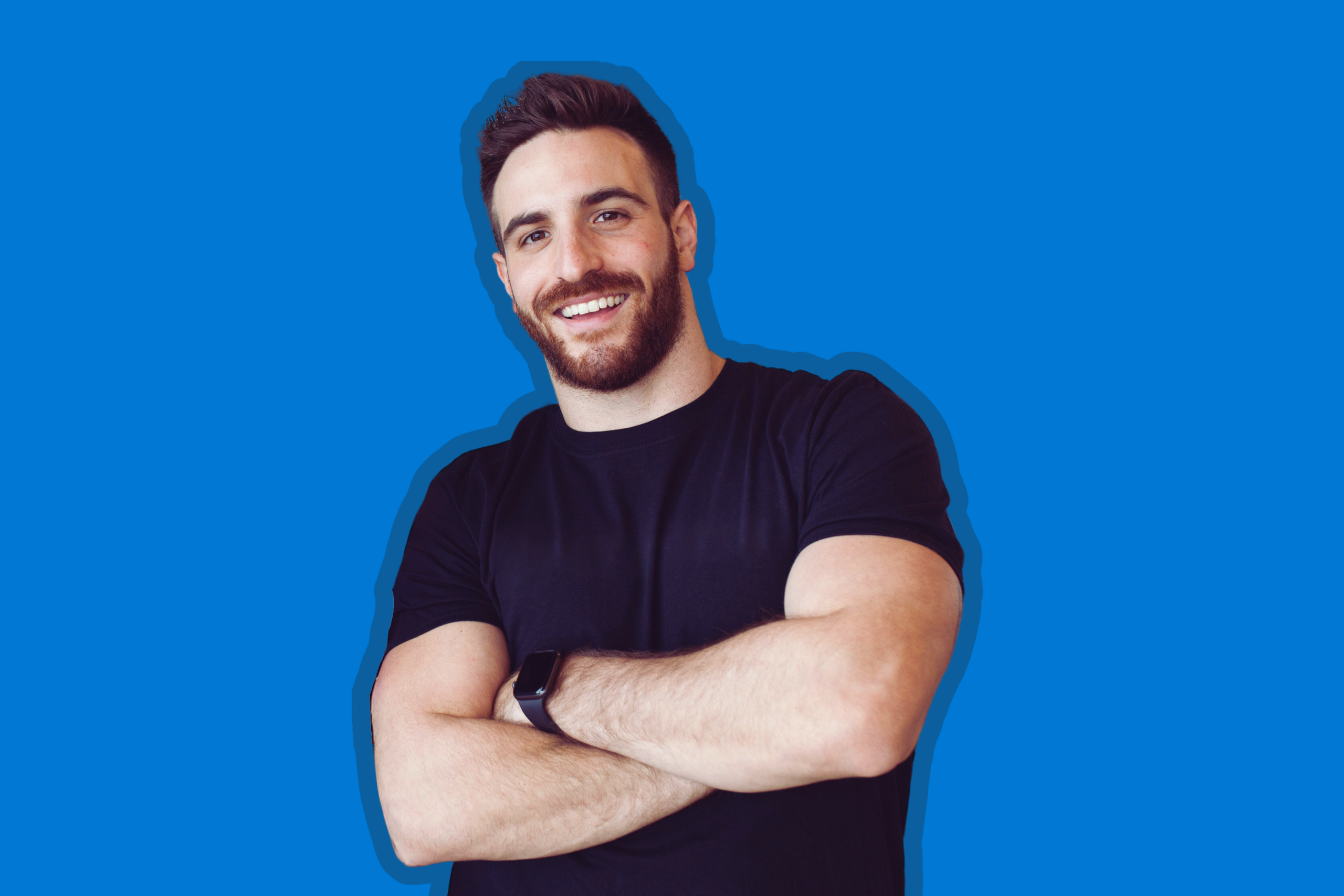
Biography
Cory Blumenfeld is a 5x founder with two exits and more than a decade of experience across startups, operations, sales, and product. Across his companies, he has helped raise nearly $5 million and built an audience of more than 70,000 followers across social platforms.
Having started businesses in industries he knew nothing about, Cory learned that success rarely comes from having all the answers. Today, he is the founder of BlueMoso, which helps business owners get their time back with high-performing virtual assistants matched to how they actually work.
Cory is on a mission to help one million business owners spend less time buried in day-to-day tasks and more time focused on what matters most, whether that’s growing their business, serving more clients, or building a life outside of work.
Giveaway
Book a free consultation with Cory.
LinkedIn https://www.linkedin.com/in/coryblumenfeld/
Website address www.bluemoso.com
Other Information

Other episodes...